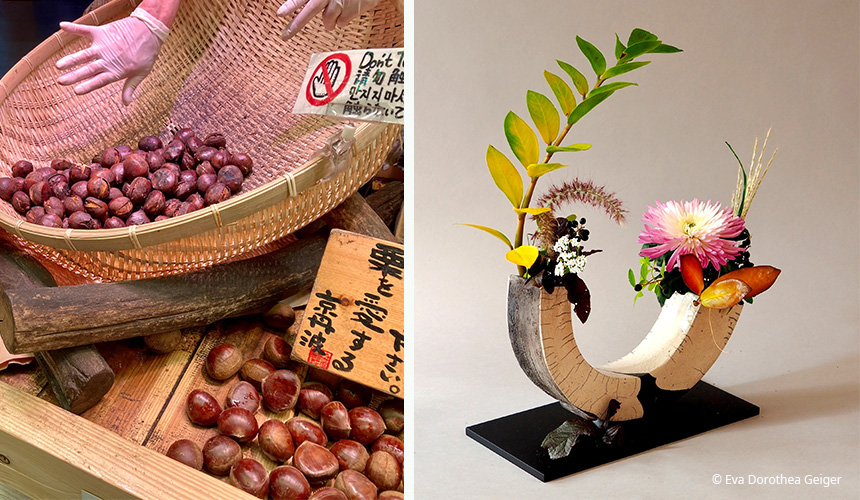
Kiku no Sekku (菊の節句) is the Japanese chrysanthemum festival, which is celebrated annually on September 9th. It is a traditional festival that was celebrated every year at the imperial court until the Meji period, when chrysanthemums were reserved for the imperial court alone.

The date goes back to the lunar calendar, in which it was originally celebrated on the 9th day of the 9th lunar month, until the date was moved to the ninth of September in line with this. Kiku no Sekku is also called chōyō no sekku (重陽の節供), which roughly means “repeated positive number”.

The origins of the festival lie in ancient China, where the chrysanthemum was believed to ward off evil spirits and was therefore a guarantee of health, happiness and long life. From the year 910, the chrysanthemum festival was also celebrated in Japan as a ceremonial at the court of the imperial family. Magnificent flower arrangements were presented, rice wine was refined with chrysanthemum blossoms and poets competed to give the chrysanthemum sonorous, poetic names. It was not until the 17th century that Kiku no Sekku became a festival for the general public, during which chrysanthemum wine was drunk and chrysanthemum blossoms were placed in people's hair to protect them from harm.
Although the festival is becoming less important in modern Japan, ceremonies still take place in various temples, shrines and gardens across the country, with some of the most famous celebrations being held in Shinjuku Gyoen Park in Tokyo and at Meiji Shrine. There, impressive displays of artfully arranged chrysanthemums bloom in a variety of colors and shapes.

It is believed that the chrysanthemum (Japanese: 菊, “Kiku” meaning evening sun) was introduced to Japan from China in the fifth or sixth century and quickly gained popularity, especially at the Japanese imperial court: it became the symbol of the imperial family and is still the imperial coat of arms and the seal of the Japanese emperor. It is the Japanese national emblem and the highest state order is awarded in the form of the Order of the Chrysanthemum 'Kiku no Gomon' (Noble Sign of the Chrysanthemum) in Japan. The chrysanthemum thus primarily denotes excellence and people or titles of high standing.
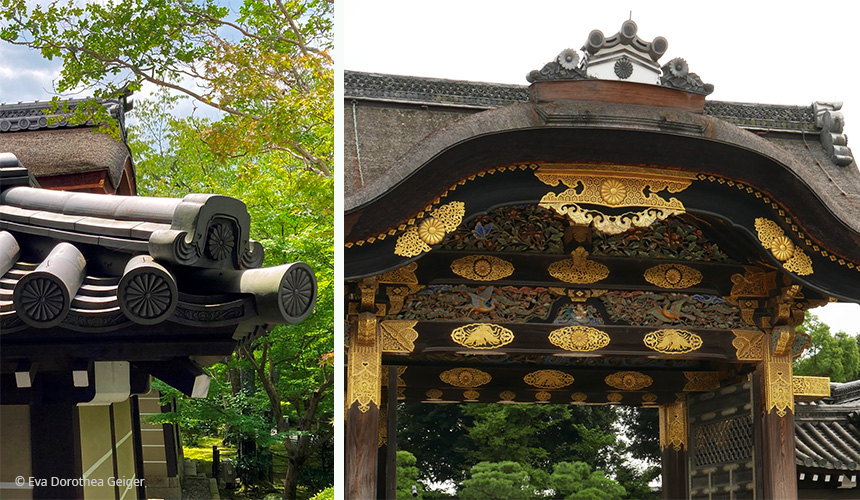
The emperor's palace is the Chrysanthemum Palace and his throne is called the Chrysanthemum Throne. In addition, the 16-petaled (and therefore particularly perfect) chrysanthemum adorns Japanese passports and many official documents and symbols of the country.
In Japan, the chrysanthemum also stands for long life, health and protection against evil. This symbolism is closely linked to the plant's autumn bloom, which reflects the cycle of nature and the coming and going of the seasons. It is also seen as a flower of good luck and health, which is why it plays a role in many aspects of Japanese life, from art to medicine.
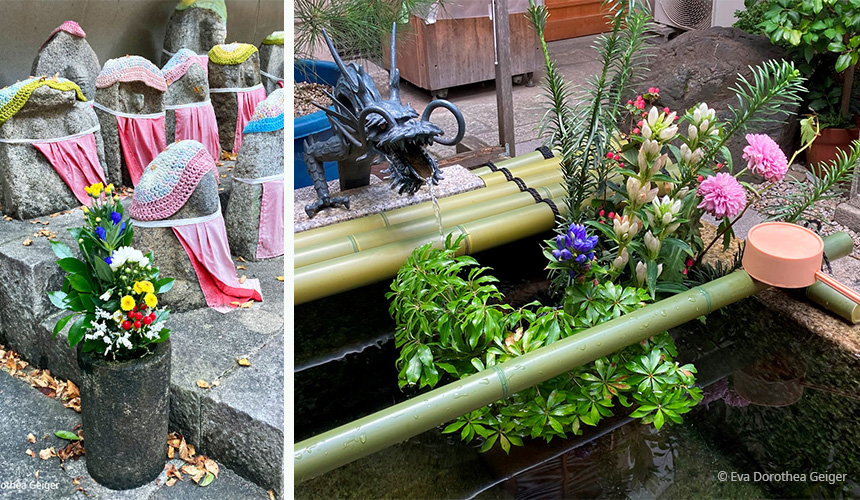
Why do the stone figures wear red or white bibs?
The wearing of bibs has its origins in Jizo Bosatsu or Jizo, a bodhisattva of Buddhism. It is believed that Jizo protects the souls of children who have died young from the demons of hell. Accordingly, the bibs worn by deceased children were tied around the Jizo statues and prayed for the happiness of these children in the afterlife. Later, prayers were offered to Jizo for the health and long life of the children and the custom arose of dedicating a bib as a symbol of the children. Until the Edo period (1630-1868), there was no clear distinction between Shintoism and Buddhism in Japan and the use of bibs as cute ornaments for religious objects became widespread among the population. Although there are no fixed rules regarding the color of the bibs, white and red fabrics are often used, as red symbolizes the sun, the autumn harvest and protection from demons in Japan, while white stands for purity. Flowers are also often offered, usually consisting of small bouquets of chrysanthemums in the fall.
In Japanese art and culture, the chrysanthemum is often used as a motif in paintings, as here in the woodcut by Suzuki Harunobu entitled Yatsushi kikujido. It can be found everywhere in old and modern Japanese textiles, for example on the pretty clutches that Patuzeria makes from old kimonos, and of course it is also the subject of ceramic designs and poems.

The festival attracts numerous visitors who not only admire the floral splendor, but also take part in cultural activities, enjoy traditional Japanese food and enjoy demonstrations of Japanese arts such as tea ceremonies and ikebana.

White chrysanthemums! Where is there a color so cheerful, so graceful? (Yosa Buson)

Perhaps the color itself, emanating from such an exquisitely symmetrical form, is beautiful enough to hold the chrysanthemum in such high esteem, even though the flowers often appear in poetry and design as symbolic representations. White varieties of this venerable flower stand for heaven, for example, while yellow varieties symbolize the earth.

White chrysanthemums, yellow chrysanthemums... if there were no other names! (Hattori Ransetsu)
A lush, long-lasting flower that blooms in the fall, the chrysanthemum sometimes also represents longevity and the culmination of inner riches found after a long life of dedication and commitment.
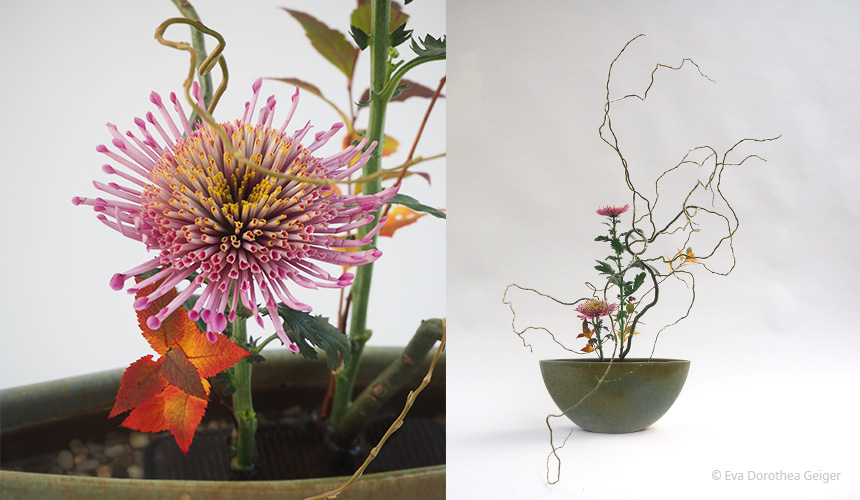
They didn't speak a word, the host, the guest, and the white chrysanthemum. (Oshima Ryota)
Chestnuts with rice are the special dish for this day, which has a distinctly autumnal feel. And even today, Kiku no Sekku is served with a sake variation made from chrysanthemums.